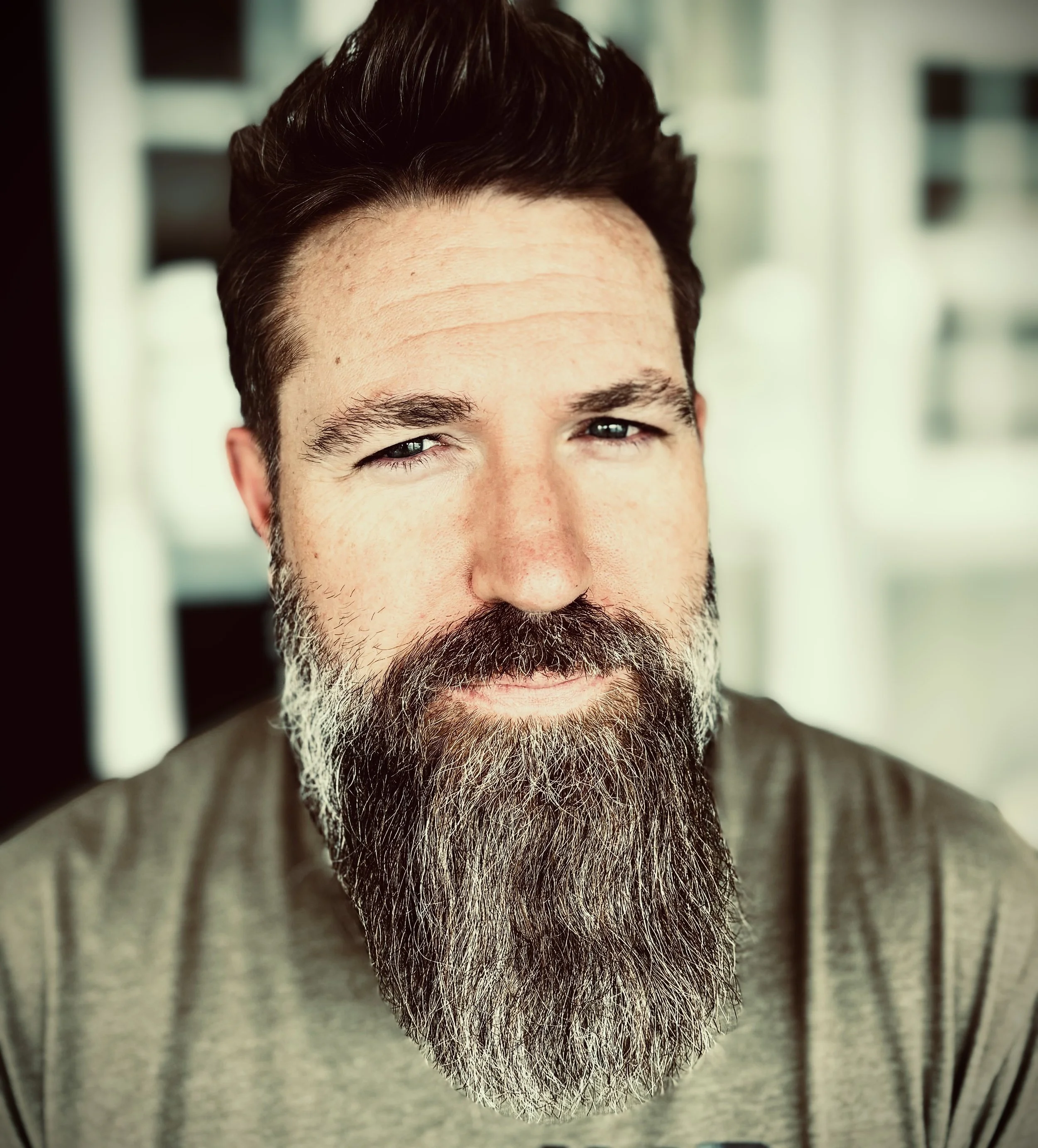
About Brian Fisher—Home Safety Manager
I've Been Inside a Lot of Homes
Not as a guest. As the guy called in to fix something, assess something, renovate the old, or figure out what went wrong.
Over the course of a career that has included law enforcement, nuclear site protection, emergency management, and more years of hands-on construction work than I can count, I have walked through hundreds of homes. New ones. Old ones. Well-maintained ones and ones held together with optimism and spray foam.
You see a lot when you're inside homes professionally. You see excellent craftsmanship that will outlast everyone who ever lives in the house. And you see the other kind — the flipped property where someone painted over a moisture problem and hoped no one would notice, the DIY fix that was creative, well-intentioned, and quietly dangerous, the deferred maintenance that started small and became structural, the ventilation system no one had thought about in fifteen years.
I never judged any of it. I started the same way most homeowners do — learning by doing, figuring things out as I went, making mistakes and correcting them. That's how hands-on knowledge gets built. There's nothing wrong with a homeowner who tries their best.
But there's a difference between a cosmetic shortcut and a health risk. And most people living in those homes have no way to tell the difference.
The Moment That Kept Repeating
I can't point to a single conversation that changed everything. It was more of a pattern that became impossible to ignore.
I'd be on a job — or walking through an estimate — and I'd spot something. Not what I was called for. Something else. A mold problem hiding behind a finished wall. Moisture that had been tracking somewhere it shouldn't for longer than anyone realized. A modification someone made for an aging parent that looked done but created a new hazard in the process. An air quality condition that explained why someone in the household always seemed to have respiratory issues.
And I'd say something. I'd walk the homeowner through it. I'd explain what I was seeing, what it could mean, and what options existed. I'd talk people out of expensive jobs that wouldn't solve the actual problem. I did it because it was the right thing to do — not because there was a service line for it, not because anyone asked me to.
After a while I realized: that thing I was doing for free, as a side note, as common decency — that was the service nobody was offering.
What the Industry Gets Wrong
Here's the truth: everyone in the home services chain is good at what they do. The home inspector is thorough and professional. The contractor, plumber, electrician, window installer, and roofer all deliver the work they were hired for. The handyman solves the problem in front of them. The real estate agent gets the deal done. These are skilled people doing exactly what they are paid to do.
But every one of them has a defined job — and that job isn't your family's long-term safety.
Some people call me Mr. Fix It. And I'll take that. But what I recognized over years of working in and around homes wasn't just a list of things that needed fixing — it was a gap that needed filled.
Most of what happens in home services is reactive. The damage is already done. The mold has already spread. The water has already been running through a compromised pipe. The fall has already happened. By the time someone calls, the problem has already cost something — money, health, peace of mind. Sometimes all three.
I've seen the same pattern in law enforcement. Most of what officers respond to is reactive — a violation has occurred, a crime has been committed, and now the system responds. The harm is already real.
Emergency management taught me a different way of thinking. The entire discipline is built around proactive planning — identifying risks before they become events, limiting damage before it happens, preparing systems and people so that when something goes wrong, the response is already in motion. It is one of the most effective frameworks for protecting people that exists.
But here's the gap nobody talks about: emergency management education and practice is focused at the business, county, state, and federal level. The frameworks are built for institutions, municipalities, and organizations — not for the family sitting in a home in Wayne County, Ohio wondering if their basement air is safe, whether the water they drink and bathe in every day is actually safe, or whether their aging parent can navigate the bathroom without a fall risk. Not for the family that has never thought about where the safest place in their home is when a tornado warning goes off, or whether they are prepared for an extended power outage. Not for the household quietly exposed to carbon monoxide, flammable materials stored without a second thought, or radon — a colorless, odorless radioactive gas that seeps through foundations and ranks as the second leading cause of lung cancer in the United States.
These are not rare, catastrophic events. They are everyday residential risks with serious, sometimes irreversible consequences — and they are almost entirely preventable with the right information and a proactive plan.
Nobody brought that proactive, planning-first mindset to the residential level. Nobody made it accessible to the homeowner who wants to know their family is safe before something goes wrong — not after.
That's what MissionCraft is. Emergency management principles applied where people actually live.
That gap is why I built it.
Where Biomarkers Fit In
Homes are supposed to be the safest place we spend our time. But sometimes the first real evidence that something is wrong with a home doesn’t show up in the walls or the water — it shows up in the people. Subtle fatigue, recurring headaches, breathing issues, skin problems, or other unexplained symptoms can all be early clues that the “safe place” you live in every day is quietly working against you.
That’s where biomarkers come in. Certain lab tests can act like a dashboard for the body, showing signs of inflammation, oxidative stress, or exposure to specific toxins. They don’t prove where an exposure came from, and they’re not a medical diagnosis — but they can raise a flag that says, “something in this environment may not be right.” When those patterns line up with what I see in the home itself — air quality issues, water concerns, moisture and mold conditions, combustion sources, or other environmental risks — it helps families connect the dots between their health and their house in a way that most inspections never even consider.
MissionCraft’s role is not to play doctor. My job is to assess the home, help families understand what environmental risks may be present, and, when appropriate, point them toward biomarker testing options through proper health and laboratory partners. Together, the home assessment and the biomarker data become a more complete picture of whether the place you trust most is truly supporting your health — or quietly undermining it.
Why I'm the Right Person for This
I hold a Bachelor's degree in Emergency Management. I am a Certified Aging-in-Place Specialist (CAPS). I am currently completing my Ohio Home Inspector license and my mold and radon-related credentials. I have spent years working in nuclear site protection — an environment where systematic hazard identification, documentation, and risk communication aren't optional. They are the standard.
But credentials don't build judgment. Years inside homes do.
I know how construction decisions get made — and cut. I know what deferred maintenance looks like in month three versus year five. I know how to read a house the way someone who has worked in it reads it — not just the surface, but the patterns underneath.
And I know how to talk to homeowners honestly. Not to alarm. Not to upsell. To give you a clear picture of what your home is doing and what it means for the people living in it.
One Commitment
Every MissionCraft assessment is independent. I don't sell repairs. I don't have contractor referral arrangements. I don't have a financial interest in what you decide to do next.
My only job is to give you the most accurate, complete picture of your home's safety conditions, help you plan proactively for what comes next, and make sure you are informed of any potential risks.
That's the whole mission……..
How that background shapes MissionCraft
I started my career in roles where safety and reliability have to be taken seriously—first in law enforcement, then protecting a nuclear power facility and monitoring critical alarms. Later, working inside homes on residential construction and renovation, I saw how often hidden issues like slow leaks, roof and flashing problems, trapped moisture, and early mold growth quietly build risk over time long before anyone notices.
MissionCraft brings those worlds together into a structured home safety assessment. Instead of focusing only on a real‑estate transaction, I look at how your home is actually performing for the people who live there—across structure, air, water, aging‑in‑place, and emergency readiness—and, when it makes sense, how those conditions may connect with health and biomarker testing through your care team or partner labs.
Rooted in Wayne County
MissionCraft is intentionally rooted in Wayne County as a small, local service—not a national brand (give me a few years). I’m building this work one household at a time, with the goal of giving families here a practical way to check in on their home’s safety, plan ahead, and avoid preventable surprises.
As MissionCraft grows, I plan to use a portion of MissionCraft‑related store and project proceeds to help offset the cost of assessments for households who need the help, because safer homes shouldn’t only be available to those with the biggest budgets. My hope is that, over time, this kind of steady, preventative work becomes part of how our community cares for both our homes and the people living in them.
How I work with your household
When I come into a home, my role is home safety manager, not contractor or sales rep. I don’t sell repair work, Instead, I:
Walk through your home with a trained eye for safety, durability, and hidden issues.
Explain what I’m seeing in plain language, with a focus on what’s most important to address first.
Point out where things like moisture, air quality, or water concerns may be worth paying closer attention to over time, including through biomarker testing when it makes sense.
Provide a clear action list and, when needed, suggestions for the types of vetted local professionals who can help with repairs, improvements, and when they are complete to make sure the work is satisfactory and correct.